
FCL vs LCL for Shopify merchants importing wholesale goods
Compare FCL and LCL shipping in plain language, then connect freight choices to Shopify case packs, MOQ rules, and wholesale buying limits.
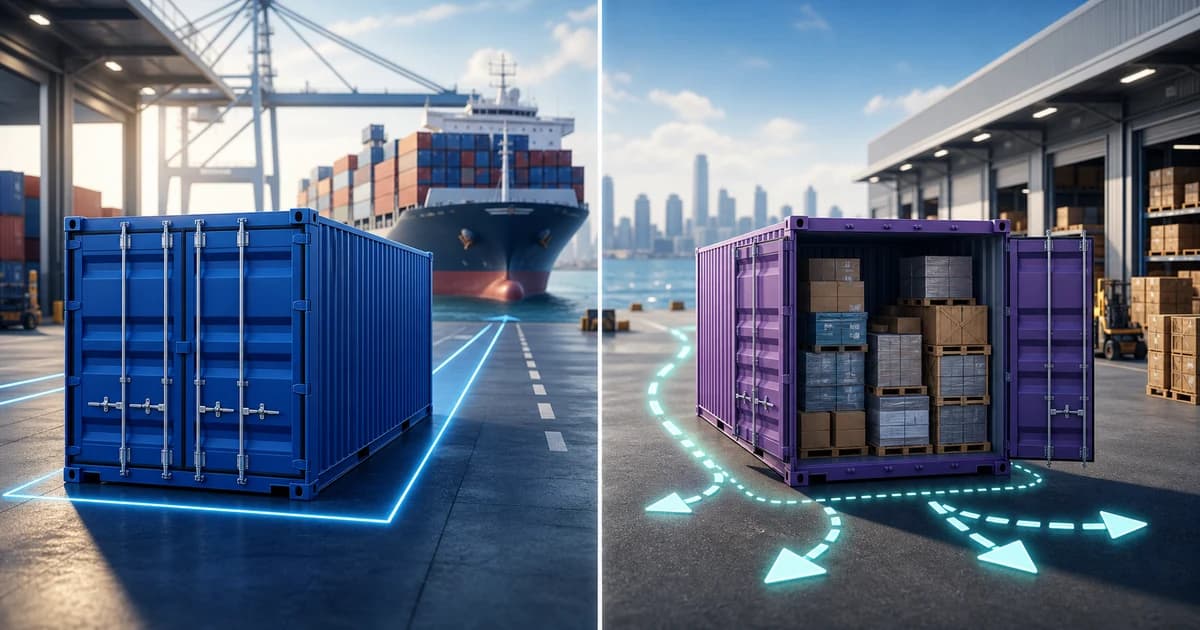
If you import products for a Shopify store, the shipping method affects more than the freight invoice. It can also shape how you sell the product later: by unit, by case, by carton, or with a minimum order quantity.
FCL and LCL are two common ocean freight options. The short version: FCL means you book a full container. LCL means your goods share container space with other shipments.
What FCL means
FCL stands for full container load. One shipper books the whole container, even if the container is not completely full.
That matters because the container usually stays with one shipment from origin to destination, unless customs or port handling requires inspection.
FCL is often useful when:
- the shipment is large enough to justify a 20ft or 40ft container
- the goods are fragile, high value, or hard to mix with other cargo
- the merchant wants less handling between origin and destination
- the schedule matters and consolidation delays would be painful
- the warehouse can receive container-sized inventory
FCL is not automatically cheaper. It depends on route, season, port fees, destination charges, and how much of the container you actually use.
What LCL means
LCL stands for less than container load. Your shipment is combined with shipments from other businesses inside one container.
A freight forwarder or consolidator handles the grouping at origin and separates the cargo at destination. That extra step is why LCL can take longer than FCL.
LCL is often useful when:
- you are importing a small number of pallets or cartons
- you want to test a product before buying a larger batch
- cash flow matters more than the lowest cost per unit
- you do not have warehouse space for a full container
- the product line is still new and demand is uncertain
LCL usually costs less upfront for small shipments, but the cost per cubic meter can be higher than FCL.
FCL vs LCL comparison
The numbers below are rules of thumb, not fixed shipping rules. A freight forwarder should quote both options when the shipment is near the cutoff.
| Criteria | FCL | LCL |
|---|---|---|
| Shipment size | Often better around 15-20 CBM or more | Often better below 15 CBM |
| Upfront cost | Higher because you book the container | Lower because you pay for used space |
| Cost per unit | Often lower at larger volume | Often higher per CBM |
| Handling | Less handling after loading | More handling during consolidation |
| Speed | Usually faster | Usually slower |
| Damage risk | Usually lower | Higher because cargo is mixed and handled more |
| Inventory impact | More stock arrives at once | Smaller batches arrive more often |
The gray area is common. A 13-15 CBM shipment might still be cheaper or safer as FCL if LCL destination charges are high. Ask for both quotes before deciding.
How freight choice affects Shopify selling rules
This is the part many merchants miss. Freight planning and storefront rules should not live in separate worlds.
If you import by carton, pallet, or case pack, your Shopify store may need to sell in those same units. Otherwise the warehouse ends up breaking packs, creating partial cartons, or picking tiny orders from inventory that was bought for wholesale movement.
Examples:
- products arrive in cartons of 12, so customers should buy 12, 24, 36, or 48
- a wholesale SKU only makes sense when the buyer orders at least one inner pack
- a product imported by FCL needs a larger order minimum to move inventory at the planned rate
- a trial shipment imported by LCL may allow lower minimums while demand is still being tested
This is where order limits become practical. A merchant can connect the freight decision to buying rules on the storefront: minimum quantity, maximum quantity, or quantity multiples.
Nexo Order Limits helps Shopify merchants set those rules without asking customers to guess what quantity is valid.
When to choose FCL
Choose FCL when the shipment is large enough, handling risk matters, or speed is worth the higher upfront cost.
A common case: you already know the SKU sells well, the supplier packs it consistently, and your warehouse can receive the inventory. In that situation, FCL can reduce handling and make the landed cost per unit easier to plan.
FCL can also make sense when the product is fragile or expensive. Fewer transfers usually mean fewer chances for damage.
When to choose LCL
Choose LCL when the shipment is small, demand is still uncertain, or you want to protect cash flow.
A new Shopify merchant might use LCL for a first wholesale batch, then move to FCL only after sales prove the volume. That keeps the initial inventory risk lower, even if freight cost per unit is not the best possible rate.
LCL is also useful when a merchant needs more frequent smaller shipments instead of one large inventory drop.
A simple decision path
Use this as a starting point:
- Estimate shipment volume in CBM.
- Ask the forwarder for both FCL and LCL quotes if the shipment is near 13-20 CBM.
- Compare landed cost per sellable unit, not just freight cost.
- Check warehouse receiving constraints.
- Convert pack sizes into Shopify buying rules before the product goes live.
The last step is easy to forget. If a product lands in cases of 12, the storefront should not quietly allow a customer to buy 13 unless the warehouse is fine breaking cases.
FAQ about FCL and LCL
What is the main difference between FCL and LCL?
FCL means one shipper books a full container. LCL means several shippers share container space.
Is LCL always cheaper than FCL?
No. LCL is usually cheaper upfront for small shipments. At higher volume, FCL can be cheaper per unit, especially when LCL destination charges are high.
Is FCL faster than LCL?
Usually, yes. FCL skips the consolidation and deconsolidation steps that LCL needs. Port delays, customs, and sailing schedules can still affect both.
Is cargo safer in FCL?
Usually. FCL cargo is handled less after loading, so there are fewer touchpoints. It is not risk-free, but the handling profile is simpler.
How does this connect to MOQ on Shopify?
If imported goods arrive by case, carton, or pallet, the store may need matching purchase rules. Shopify merchants can use MOQ or multiple-based rules so customers buy in quantities that fit the supply chain.